Gravel Driveway Installation
Contact Us

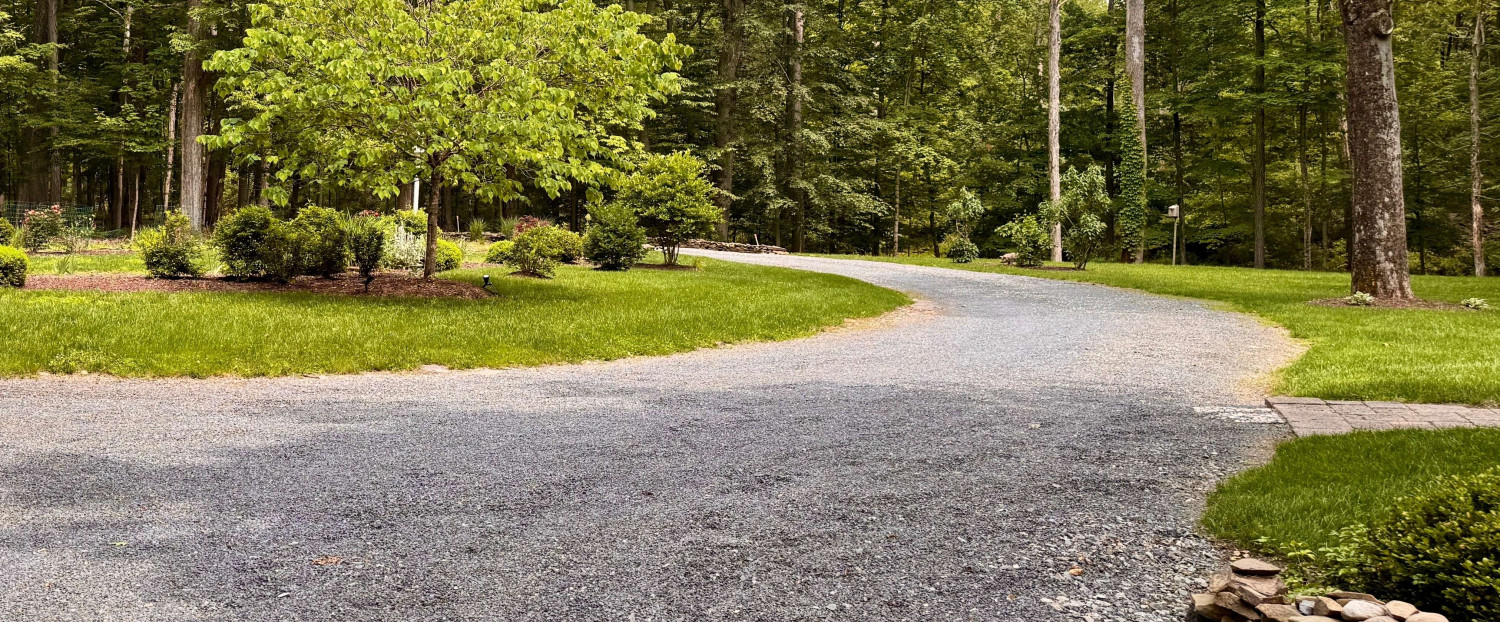
A gravel driveway properly installed prevents the rutting, washout, and mud problems common on rural properties in Eugene and Junction City where soil drains poorly and winter rainfall saturates unprepared surfaces. Mystic Landscaping installs gravel driveways by preparing the subgrade, establishing drainage paths, and layering material to create a stable surface that supports vehicle traffic without displacing under load. Properties with long access roads, sloped driveways, or clay-heavy soil need installation methods that account for how water moves across and through the driveway during Oregon's wet season.
The installation addresses base stability and water management rather than simply spreading gravel over existing ground. Proper preparation involves excavating to remove organic material that compresses over time, grading the surface to create crown or cross-slope for drainage, and compacting each layer before adding the next. Skipping base preparation leads to gravel sinking into soft soil, creating depressions that collect water and accelerate surface degradation.
Arrange a property consultation to review driveway length, slope, and soil conditions that affect installation approach.
Gravel driveway installation begins with excavating to the depth needed for base and surface layers, typically six to eight inches for residential driveways handling standard vehicles. The base layer uses larger crushed rock that locks together and resists shifting, while the surface layer uses smaller gravel that compacts tightly and provides a smooth driving surface. Grading establishes slope that directs water toward edges rather than allowing it to pool on the driveway, and compacting each layer with a mechanical roller ensures the material stays in place under traffic.
After installation, your driveway provides a firm surface that vehicles can use year-round without sinking into mud or creating ruts. Water drains off the surface rather than saturating the ground beneath, the gravel stays in place rather than migrating toward low spots, and the driveway remains passable even during extended rainy periods. You'll also notice reduced dust compared to bare dirt and a defined edge that keeps gravel from spreading into surrounding landscaping.
The installation includes edge containment when needed to prevent gravel migration, establishing drainage culverts where the driveway crosses natural water flow paths, and compacting material to density that resists displacement. The type of gravel used for the surface layer affects how well the driveway drains, how much dust it generates, and how often it needs topdressing as material gradually compresses and embeds.
Gravel driveway installation raises questions about material choices, longevity, and what distinguishes a properly built driveway from one that fails within a few seasons.